
For those of you that are new to the world of FAP, you must first understand the genetic disease.
Briefly, Familial Adenomatous Polyposis is a rare hereditary genetic mutation on the APC gene that predisposes an individual to colon cancer due to hundreds to thousands of precancerous polyps developing in the colon at an early age. Those with FAP develop significantly more polyps and at an earlier age than those without FAP. If the FAP polyps are not treated, the individual will inevitably develop colon cancer. Due to the autosomal dominant hereditary nature of FAP, the offspring of an affected individual has a 50% chance of inheriting FAP.
There are associated manifestations of FAP as well. These include:
- Congenital hypertrophy of retinal pigment epithelium (CHRPE)
- Osteomas, supernumerary teeth, odontomas
- Desmoids, fibromas, cysts, lipomas
- Stomach, duodenal, and other small bowel adenomas
- Gastric fundic gland polyps
- Brain tumors
- Increased Risk for Gastric Cancers and cancers of the Thyroid, Pancreas, Liver, Central Nervous System, Adrenal, and Bile Ducts
FAP is sometimes referred to as Gardner’s Syndrome. This was described as a variation early on, prior to the level of understanding about FAP that is now known and is no longer acknowledged by the National Comprehensive Cancer Network (NCCN).
FAP occurs due to a mutation on the APC gene and has been associated with mutations between codons 178 and 309, between codons 409 and 1,580, corresponding to exons 5-8, 9-14 and the first half of the large final exon. While the APC gene is the only gene identified to lead to FAP, there have been over 300 different variations of mutations found on the APC gene thus far.
Attenuated FAP is a variation characterized by a significant risk for colon cancer but fewer colonic polyps (average of 30), more proximally located polyps, and diagnosis of colon cancer at a later age; management may be substantially different. AFAP mutation on the APC gene is usually associated with mutations at the extreme 5′ (before codon 157) and 3′ (after codon 1,595) ends of the APC gene, and in the alternatively spliced region of exon 9 (codons 213-412).
If a brain tumor occurs in someone with either FAP or a hereditary non-polyposis colorectal cancer condition, it has been referred to previously as Turcot Syndrome. However, the NCCN recommends against using this term as it is imprecise.
NCCN recommends genetic testing to occur in infancy for children suspected of having FAP with colonoscopies occurring annually upon age 10, if symptoms do not present earlier requiring colonoscopy. For monitoring of hepatoblastoma to occur every 3-6 months from birth to age 5. NCCN guidelines also provide detailed recommended monitoring guidelines for the additional cancer risks associated with FAP. These can be viewed by creating a free account with NCCN.
To learn more about Familial Adenomatous Polyposis visit these resources:
- National Comprehensive Cancer Network – FAP Guidelines for Testing and Management. Updated Annually
- Hereditary Colon Cancer Foundation Patient Guide to FAP. 2015
- National Organization for Rare Disorders FAP Report. 2014
- StatPearls: Familial Adenomatous Polyposis. 2023
- Medscape: Familial Adenomatous Polyposis Report. 2019
- The Genetic Basis of Familial Adenomatous Polyposis and its Implications for Clinical Practice and Risk Management. 2015
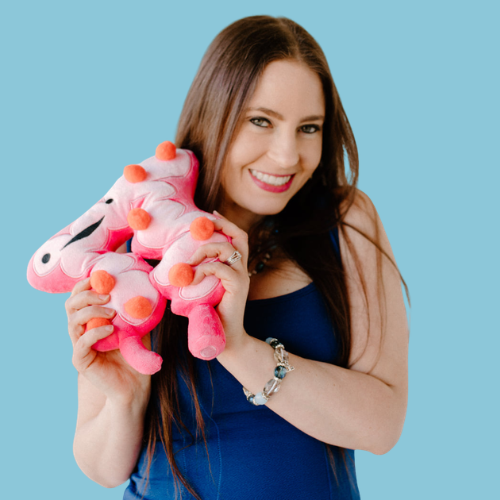
Now that you have some understanding of FAP, may I introduce my history with FAP.
I was diagnosed with FAP around the age of 8. I first began to have severe stomach pains. My parents consulted my PCP and requested a referral to a GI specialist repeatedly. I was dismissed as a “whiny child”. My parents changed insurance plans that didn’t require referrals and I came under the care of a pediatric GI specialist, who continued to follow me for 20 years. I was pre-ulcerous due to stress, and she uncovered family history of FAP and began monitoring my health for polyp development. Prior to my first surgery, I had accidently eaten during my prep. This resulted in having a nurse come to my home to insert a NG tube to remove the food in my stomach and finish my prep. However, she experienced difficulty with the insertion resulting in repeated attempts that I believe lasted at least half an hour. This was extremely traumatizing for me and impacted the medical PTSD I would later develop.
I also had supernumerary teeth or extra teeth that appear in addition to regular teeth. I had about 6 extra teeth that had to be surgically removed. It was not until I was in college that my parents and I learned the extra teeth were associated with FAP. I also have CHRPE.
At age 9, I underwent a total colectomy under the recommendations of specialists due to precancerous FAP polyps beginning to turn cancerous in order to prevent full development of colon cancer. The plan was to have a temporary ileostomy that would later be “taken down” after recovery ending with a Jpouch. However, I suffered several surgery complications. The first being infection of my incision resulting in ER staff restraining me while they cut open my incision without any sedation or effective pain medication. The second being my small intestine wrapping around itself and surrounding organs, cutting off my blood supply and killing my Jpouch. This was not discovered by the ER doctor though who would only perform an x-ray and told my parents there wasn’t anything wrong with me, I was “just a whiny child”. The ER staff couldn’t believe I had lived through the night when my parents took me back to the ER the next morning. I required the dead part of my small intestine to be removed and I was unable to have my ileostomy reversed as planned. This led to my second rare disease diagnosis, Short Bowel Syndrome. During the span of this year, I underwent a total of 5 surgeries and experienced near-death and medical trauma resulting in medical PTSD, severe depression, and anger.
At age 9, I underwent a total colectomy under the recommendations of specialists due to precancerous FAP polyps beginning to turn cancerous in order to prevent full development of colon cancer. The plan was to have a temporary ileostomy that would later be “taken down” after recovery ending with a Jpouch. However, I suffered several surgery complications. The first being infection of my incision resulting in ER staff restraining me while they cut open my incision without any sedation or effective pain medication. The second being my small intestine wrapping around itself and surrounding organs, cutting off my blood supply and killing my Jpouch. This was not discovered by the ER doctor though who would only perform an x-ray and told my parents there wasn’t anything wrong with me, I was “just a whiny child”. The ER staff couldn’t believe I had lived through the night when my parents took me back to the ER the next morning. I required the dead part of my small intestine to be removed and I was unable to have my ileostomy reversed as planned. This led to my second rare disease diagnosis, Short Bowel Syndrome. During the span of this year, I underwent a total of 5 surgeries and experienced near-death and medical trauma resulting in medical PTSD, severe depression, and anger.
It wasn’t until age 14 when I agreed to attend mental health counseling to start to process my medical trauma and learn healthy coping skills. This was life changing for me and I highly recommend mental health counseling upon diagnosis of FAP and for the family members of someone who is diagnosed. I also highly recommend physical therapy following any abdominal surgery.
At age 15, I came under the care of a different surgeon and with consultation of my GI specialist, I underwent a 6th surgery to take down the ileostomy and was given a straight pull-thru. The following year, my health unexpectedly began to rapidly decline, and I again was not expected to live. I was vomiting multiple times a day and having stools of a liter at a time. I lost considerable weight, experienced chronic chemical imbalances, and required frequent hospitalization. During this time, I developed a hole in my small intestine at my reconnection site. In an effort to prevent surgery to repair the hole, I received TPN through a central line for several months and was NPO for many weeks. Once I was able to have something by mouth, it started as 1 oz of ice chips per hour, then 1 oz of water per hour until I was able to drink water freely. Food later started with one egg a day for breakfast, then a plain chicken breast with rice for lunch, and then later for dinner also. Once I was able to start having a more varied diet, protein was the priority, and I was required to ingest protein drinks and bars frequently. I also underwent hyperbaric treatments to speed my healing process. After repeated, extensive testing, in and out of state, over the course of several months, I underwent exploratory surgery which identified my adhesions created a stricture around my small intestine to be the source of my health decline. Over the next 5 years, I continued to struggle with my health requiring frequent hospitalizations and ongoing medical treatments.
At age 15, I came under the care of a different surgeon and with consultation of my GI specialist, I underwent a 6th surgery to take down the ileostomy and was given a straight pull-thru. The following year, my health unexpectedly began to rapidly decline, and I again was not expected to live. I was vomiting multiple times a day and having stools of a liter at a time. I lost considerable weight, experienced chronic chemical imbalances, and required frequent hospitalization. During this time, I developed a hole in my small intestine at my reconnection site. In an effort to prevent surgery to repair the hole, I received TPN through a central line for several months and was NPO for many weeks. Once I was able to have something by mouth, it started as 1 oz of ice chips per hour, then 1 oz of water per hour until I was able to drink water freely. Food later started with one egg a day for breakfast, then a plain chicken breast with rice for lunch, and then later for dinner also. Once I was able to start having a more varied diet, protein was the priority, and I was required to ingest protein drinks and bars frequently. I also underwent hyperbaric treatments to speed my healing process. After repeated, extensive testing, in and out of state, over the course of several months, I underwent exploratory surgery which identified my adhesions created a stricture around my small intestine to be the source of my health decline. Over the next 5 years, I continued to struggle with my health requiring frequent hospitalizations and ongoing medical treatments.
In 2021, I underwent my 8th surgery to remove adhesions for the 3rd time and remove my gallbladder due to being precancerous from FAP and full of gallstones. I experienced chronic, debilitating pain following this surgery and after 6.5 months of testing across 7 specialists, I was diagnosed with Abdominal Migraine.
Currently, I am enjoying a reasonable level of health. I continue to experience very hard, trying days but my health has stabilized for the most part and I am able to pursue the majority of activities and goals with accommodations.
I hope you’ll join me on this journey with FAP and SBS, gaining information, understanding, and support.
Currently, I am enjoying a reasonable level of health. I continue to experience very hard, trying days but my health has stabilized for the most part and I am able to pursue the majority of activities and goals with accommodations.
I hope you’ll join me on this journey with FAP and SBS, gaining information, understanding, and support.
Over the years since starting LAP, I have expanded my advocacy efforts to include various avenues. The links to these various avenues and platforms are linked to the side. In addition, I have written a children’s book about FAP titled Life’s a Polyp with Zeke and Katie and established the NORD FAP Research Fund in 2015. My goal is to fully fund it so that more research may be conducted for FAP treatments.
Updated 2/2023
0 Comments